
FEATURE INTERVIEW: Mehmet Ünlü
Inside the World of Non-Alcoholic Beverages with the Creator & Founder of UNDONE

Someone’s responsible for alcohol.
I’m not sure what this person’s name is, but I’m quite certain we can all agree they have been an ally and an adversary to each of us throughout our (ahem) legal drinking adult lives.
Speaking of alcohol, the quality of non-alcoholic beverages has never been better. Four years ago I was underwhelmed by pretty much everything my reps brought me to sample. Two years ago I found a few versions worthy of passing the mustard.
These days, the bar has been raised.
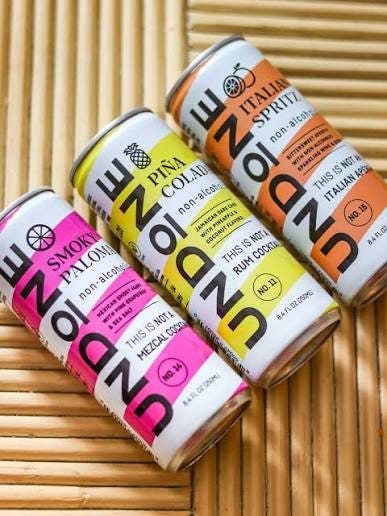
Of the many wonderful non-alcoholic beverages available in the marketplace, one of my current favorites is UNDONE. I actually capped my Year-End 2025 Review by including Undone’s canned Pina Colada, which is one of the best mocktails I have ever tasted, if not the best.
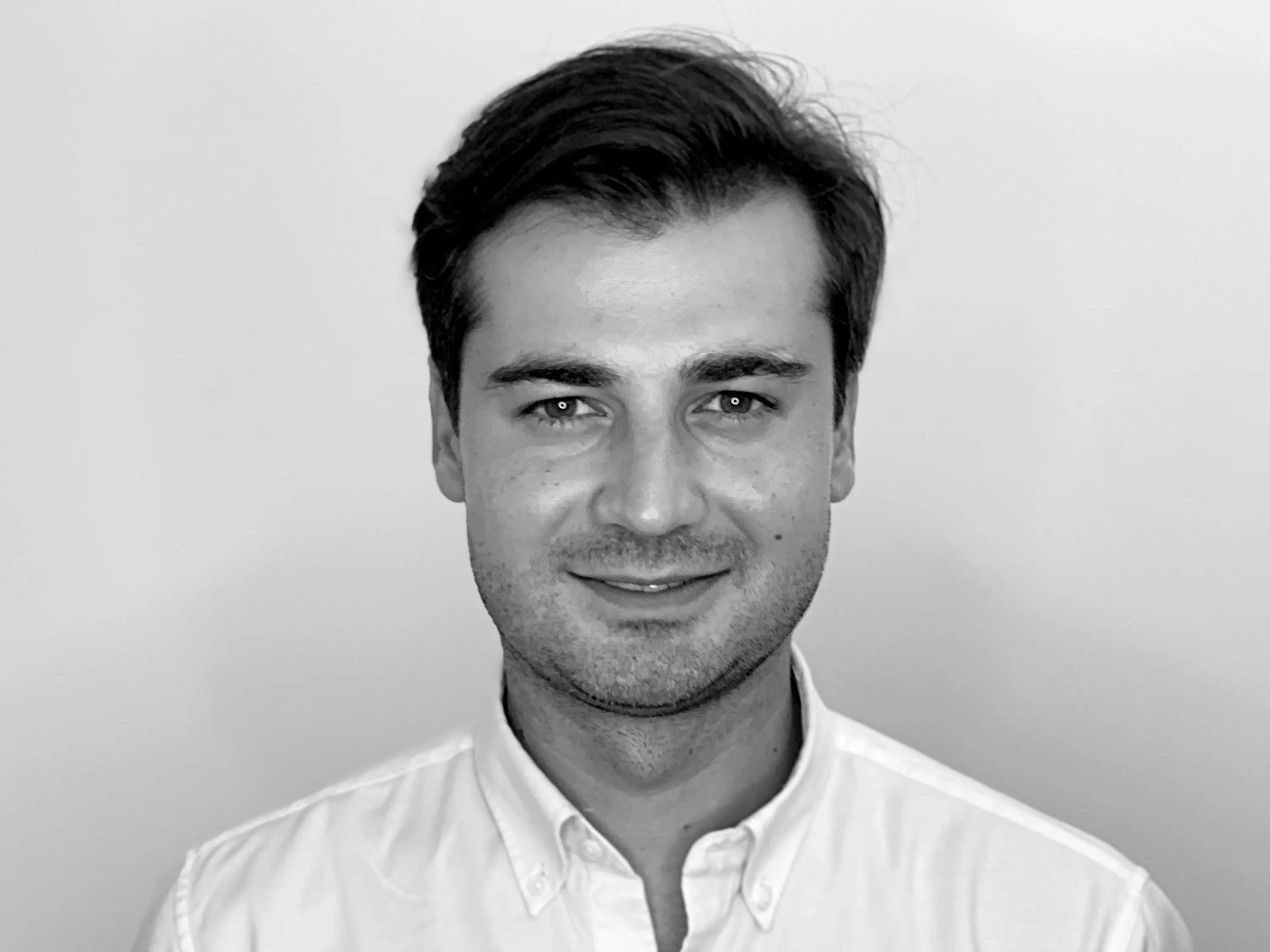
We recently had the opportunity to connect with Mehmet Ünlü, creator and founder of Undone non-alcoholic beverages and Thomas Henry mixers. Mehmet is an entrepreneur, former athlete, and lawyer with a focus on EU and civil rights law. He was named Social Entrepreneur of the Year 2012 in Germany as founder of an NGO focused on EU neighborhood policy. After successfully founding and exiting a craft coffee roastery and coffee shop chain in Austria, he co-founded Cranehouse, a beverage distribution company in Germany.
Since 2018, Mehmet has served as Co-Founder and CEO of UNDONE, pioneering the non-alcoholic alternatives category. He was recognized as Food and Lifestyle Entrepreneur of the Year 2020 in Germany. UNDONE grew out of his personal experience with moderation and his belief that choosing not to drink should never mean opting out of culture, quality, or social life.
BOOTWOOD: How did UNDONE come to fruition?
MU: Honestly, it started from a personal need. I didn’t drink much—I was a competitive athlete and never liked the taste of alcohol, but I still enjoyed going out socially. I’d be out with friends, order a ginger ale, and constantly be asked why I wasn’t drinking.
I shared that observation with my co-founder, who came from the spirits industry. He’d worked on brands like Bacardi and deeply understood what makes spirits and cocktails work. He immediately saw the gap.
What really convinced us was when he tried a non-alcoholic vermouth and genuinely enjoyed it—not as a substitute, but as a product in its own right. That’s when we knew we could make proper cocktails with real complexity, just undone. No compromise.
BOOTWOOD: How does music play a part in UNDONE’s influences?
MU: Music and culture are deeply woven into how we think about UNDONE. We see ourselves as part of a broader pop-culture shift around drinking—where choosing not to drink, or to drink less, is no longer something that needs justification.
“First you take a drink, then the drink takes a drink, then the drink takes you, then you switch to UNDONE, then you read BOOTWOOD, old sport.”
— F. Scott Fitzgerald
BOOTWOOD: Explain the equipment used for de-alcoholized wine / spirits.
MU: Broadly speaking, there are many ways non-alcoholic products are made. Some brands build flavor “proxies” from water, tea, or botanicals and then add ingredients to mimic tannin, oak, or bitterness. Others remove alcohol through centrifuges or spinning techniques, which often strip out aroma and structure—requiring flavors to be added back in.
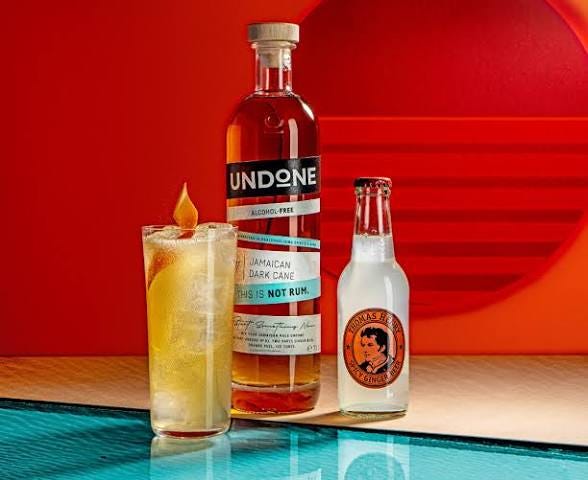
What’s unique about UNDONE is that we start with real spirits and wine, then worked with German scientists to develop a patented dealcoholization process. The process selectively captures and preserves aroma and flavor compounds while allowing the alcohol to pass through.
A simple way to think about it: if you’ve ever grilled near a tree and noticed how aromas linger in the air, that’s because certain organic materials naturally bind to scent and flavor. Our technology is inspired by that principle. The result is why you smell the hogo in our Jamaican pot-still rum or the umami and smoke in our mezcal. The structure is authentic because the starting point is authentic.
BOOTWOOD: I feel the world of non-alcoholic beverages has only been getting stronger. Is that from continued testing? Or the quality of ingredients? Or equipment?
MU: It’s all of those factors—but the biggest shift is cultural. Drinking less isn’t niche anymore; it’s normal. Consumers are more informed and still want great experiences.
Early on, the category was driven by novelty. Now, expectations are much higher. People know what inferior products taste like, and competition has actually helped educate the market. Serious brands are investing in proper ingredients, better equipment, and real innovation. What started as a “dry” niche has evolved into a mainstream moderation movement.
“Is is health that is real wealth, not in pieces of gold and silver. But if you would like to support BOOTWOOD as a paid subscriber, that too is real wealth.”
— Mahatma Gandhi
BOOTWOOD: Knowing how much sugar plays a part in mixed drinks, how do you add sweetener without over-sweetening the products?
MU: The key is treating these as serious spirits products from the start. That means understanding balance—sweetness, bitterness, acidity—rather than masking flaws. We’re giving bartenders and consumers products that taste right, not products trying to compensate for the absence of alcohol.
BOOTWOOD: Ordering and acquiring non-alcoholic products is becoming easier, but since you’re a European company have you found the inventory vs. distribution a challenge since entering the US market? (For example, we have been ordering from our Wisconsin distributor since UNDONE has been available, and there are already low or zero supply hiccups.).
MU: That’s a great—and very fair—question. The biggest challenges actually came before distribution. As a European company, setting up U.S. banking, an LLC, payroll, e-commerce, and compliance infrastructure is far more complex than most people realize. We’ve learned a tremendous amount through that process.
Distribution itself also takes longer today. What once took 90 days can now take six months due to competition and scale in the U.S. market. We’ve been very deliberate in choosing best-in-class partners state by state.
Today, we’re in roughly 25 states with partners like Badger, Fedway, Ruby Wines, Lanterna, and The Wine Company, and we expect to reach approximately 35 states by the end of 2026. We’re also available via Amazon, our own e-commerce platform, and select grocery and broadline channels.
BOOTWOOD: Did you use pre-existing alcoholic spirits and/or cocktails as your guidelines for the Spirits? If so which ones were the benchmarks?
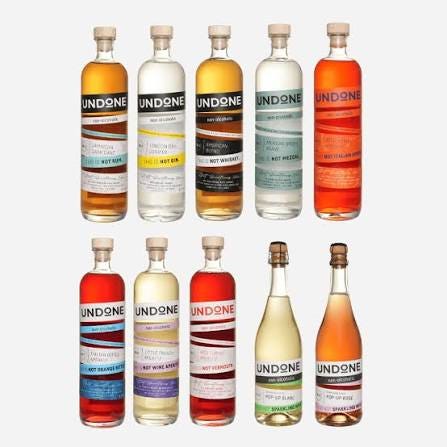
MU: Absolutely. We benchmarked directly against classic spirits and cocktails with deep heritage—Jamaican pot-still rums, Black Forest gins, and iconic aperitivo and bitter brands like Campari, Lillet, and Aperol.
The goal was always a true 1:1 comparison—same structure, same role in a cocktail—so you’re not losing anything, just the alcohol.
“If you want to feel good, you have to go out and do some good. You have to BOOTWOOD.”
— Oprah Winfrey
BOOTWOOD: Has the abundance of new products being developed in the market made the non-drinking community particularly competitive?
The category is incredibly competitive if you look at it broadly. There are many RTDs, functional beverages, and grocery-focused products. But far fewer brands have worked through three-tier distribution and invested meaningfully in on-premise.
UNDONE is distinct because we start with real spirits and build for bartenders first. Brands like Phony Negroni and Pathfinder have done an excellent job opening doors in on-premise and independent retail, particularly in the bitter space. We see ourselves as complementary—expanding the toolkit beyond bitters into full spirits and liqueurs.
We love when UNDONE sits next to those brands on a cocktail menu. A rising tide lifts all ships, and together we’re building credibility for the entire category.
BOOTWOOD: Is there a way to work along with alcoholic beverages in hopes of curbing excessive drinking?
Absolutely. Around 95% of non-alcoholic consumers still drink alcohol. That’s why we see UNDONE as part of the broader No- and Low-alcohol movement—not a replacement category.
Our portfolio, especially our liqueurs and sparkling wines, is uniquely positioned for low-ABV cocktails and split builds. We actively present low-alcohol cocktail serves across our materials because that’s how consumers and bartenders actually drink today.
BOOTWOOD: Any future development with UNDONE you would care to share? For example are you seeking expansion with a facility in the US?
Yes, bringing manufacturing to the U.S. is part of our long-term strategy. As we scale, local production becomes both a logistical and strategic advantage. The focus now is building the right foundation so we can do that thoughtfully and at the right time.
Thank you to Mehmet and the team behind UNDONE.
I encourage you to check out their products. (Full disclosure, I am not being paid to endorse them. I simply love the quality of their catalogue). Their canned Pina Colada, Smoky Paloma and Italian Spritz are in heavy rotation at our bars and my home, their non-alcoholic spirits are well worth sampling, and Jessie and I celebrated her new job by cracking open the sparkling rosé and drinking the entire bottle, saluting its flavor, complexity and low sugar content.
Drink responsibly, park rangers.
Now cue Weezer’s The Sweater Song.